
What does ワイプ (waipu) mean in karaoke? Color change vs. TV window
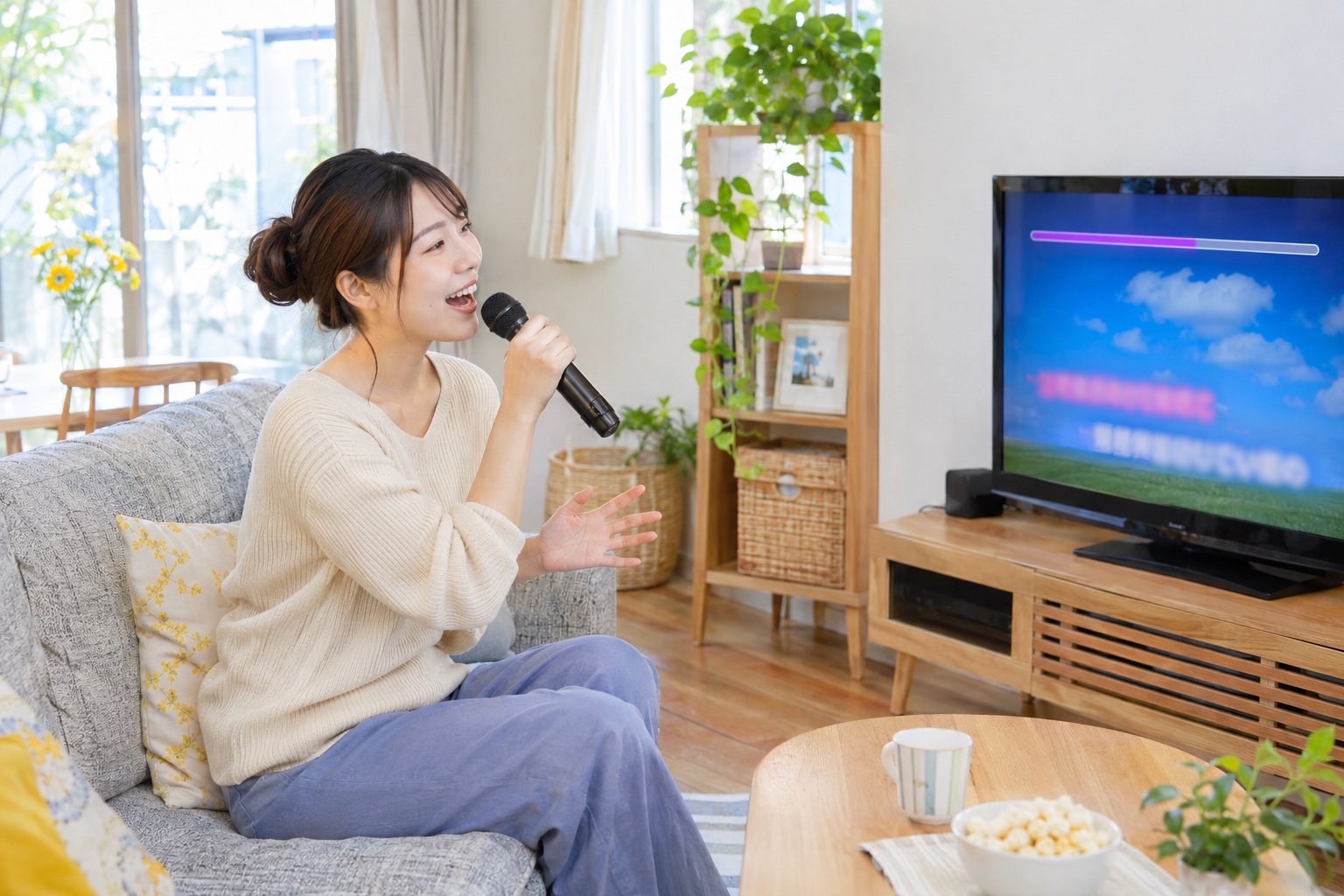
ワイプ (waipu) is a Japanese loanword from the English “wipe”. If you have watched Japanese variety shows, you may know it as the small reaction window in the corner of the screen, where a celebrity reacts to a clip. In karaoke it usually means something else: a lyric display where the characters change color from left to right as the song moves along, which the karaoke industry also calls 色変え (“color change”). Which one is meant depends on the context.
What is ワイプ (wipe) in karaoke?
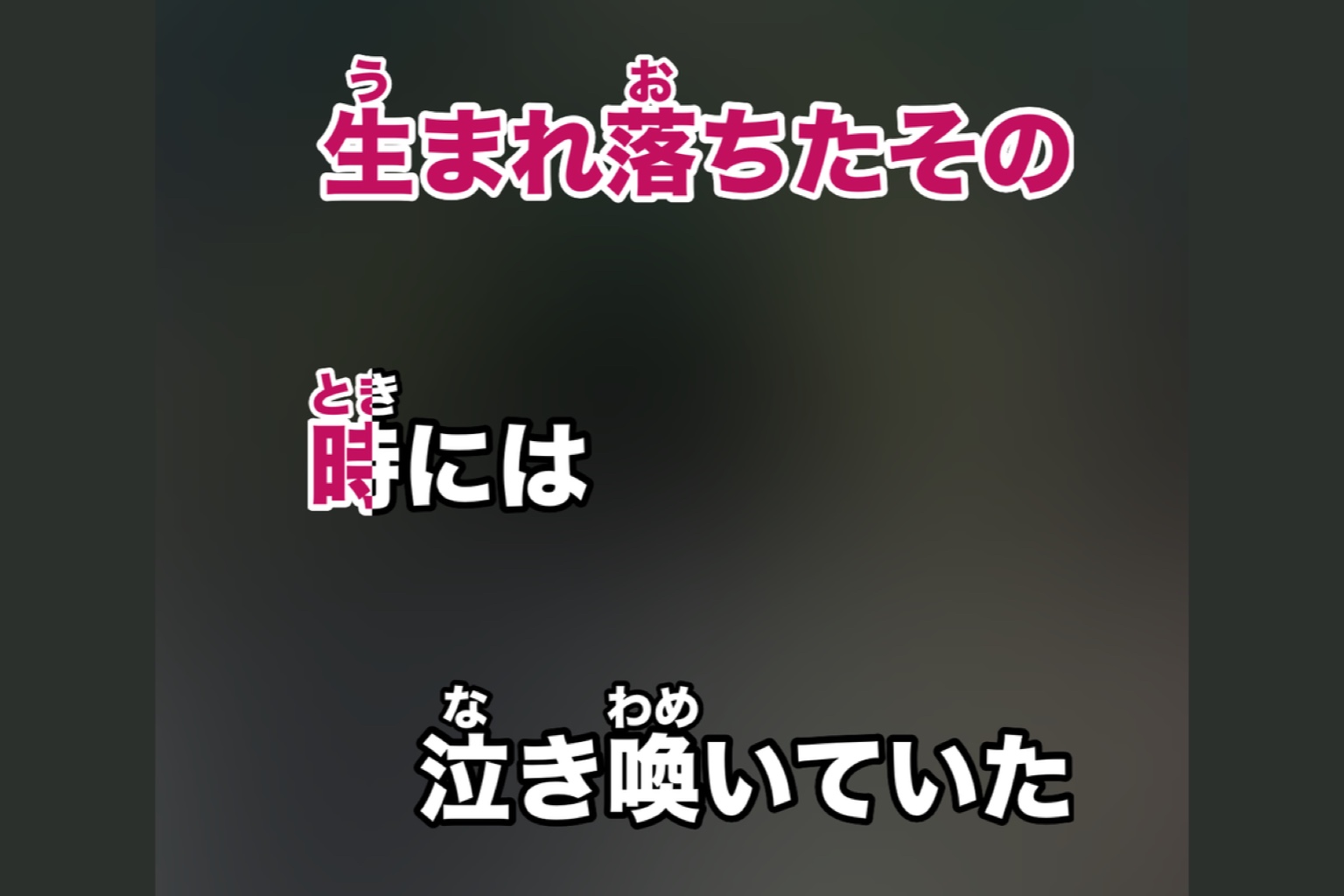
In karaoke, ワイプ is the effect where lyric text is recolored in time with the song. The karaoke industry in Japan also calls it 色変え (“color change”). In English you will usually see it described as word-by-word or character-by-character highlighting.
It is useful for two reasons.
- It marks where to start singing. The character that begins to change color is the one you sing now.
- It shows how far you have sung. The edge of the color tells you your position even in the middle of a line.
One caveat: no dictionary or official definition that names this display ワイプ could be found. Treat it as a term often borrowed from video editing, not a formal one.
Is it different from the TV ワイプ (the corner window)?
Yes, it is a different meaning. The TV one is what English speakers call picture-in-picture, or simply a reaction window: a second video shown over part of the main picture. Japanese calls that ワイプ (or ワイプ映像), and English has no single word that matches it. The name is usually explained as an extension of the video-editing term: in film and video editing, a wipe is a transition where a new image pushes across the screen and wipes away the previous one. No primary source for that origin could be confirmed, so treat it as the commonly given explanation.
| ワイプ usage | What it means | Where you see it |
|---|---|---|
| Karaoke lyrics (色変え) | Characters change color left to right with the song | Karaoke lyric screens |
| TV corner window (ワイプ映像; picture-in-picture, reaction window) | A second video shown over part of the main picture (such as a guest’s reaction) | Japanese TV shows |
| Editing transition (English “wipe”) | A cut where a new image wipes away the old one | Film and video editing |
How does the lyric color change?
As far as patent documents show, there are systems that store a start and end time for the color change of each lyric character (JPH11344987A), and systems that send color-change speed information in sync with the performance (US5997308).
Karaoke color change works by comparing per-character times with the current playback position to decide how far to change the color. For a fuller explanation, see how word-by-word highlighting works.
How is ワイプ different from “color change,” “highlight,” and “word-by-word”?
They point to similar things but look at different aspects.
- Color change. The industry term. It describes the movement of the color itself.
- Highlight. The general term for making the sung text stand out; it does not say how fine the timing is.
- Word-by-word (character-by-character). The granularity of the data: every character has its own time.
A line-by-line display only knows when each line starts, so it just switches lines. To have color advance partway through a line, you need timing for each character. Names vary by machine and situation, so judge by what you actually see on screen. For more vocabulary, see karaoke terms explained.

What if the ワイプ is out of sync?
Lyrics whose color runs ahead of or behind your singing are out of sync because the timestamps attached to the lyrics no longer match the real playback position. The two common causes are Bluetooth earphone delay and a different version of the song. The fixes are covered in how to fix out-of-sync lyrics.
If you sing at home
Hitokara is a karaoke app that colors lyrics one character at a time along with songs from Apple Music, for singing at home with color-changing lyrics. If you are curious, see what Hitokara (solo karaoke) is.